
Mrs. Snow’s third-grade class at the Kenneth L. Rutherford Elementary School recently took a journey across the world without ever leaving the classroom, thanks to a special visit from KLR art teacher, Mrs. Kharkover.
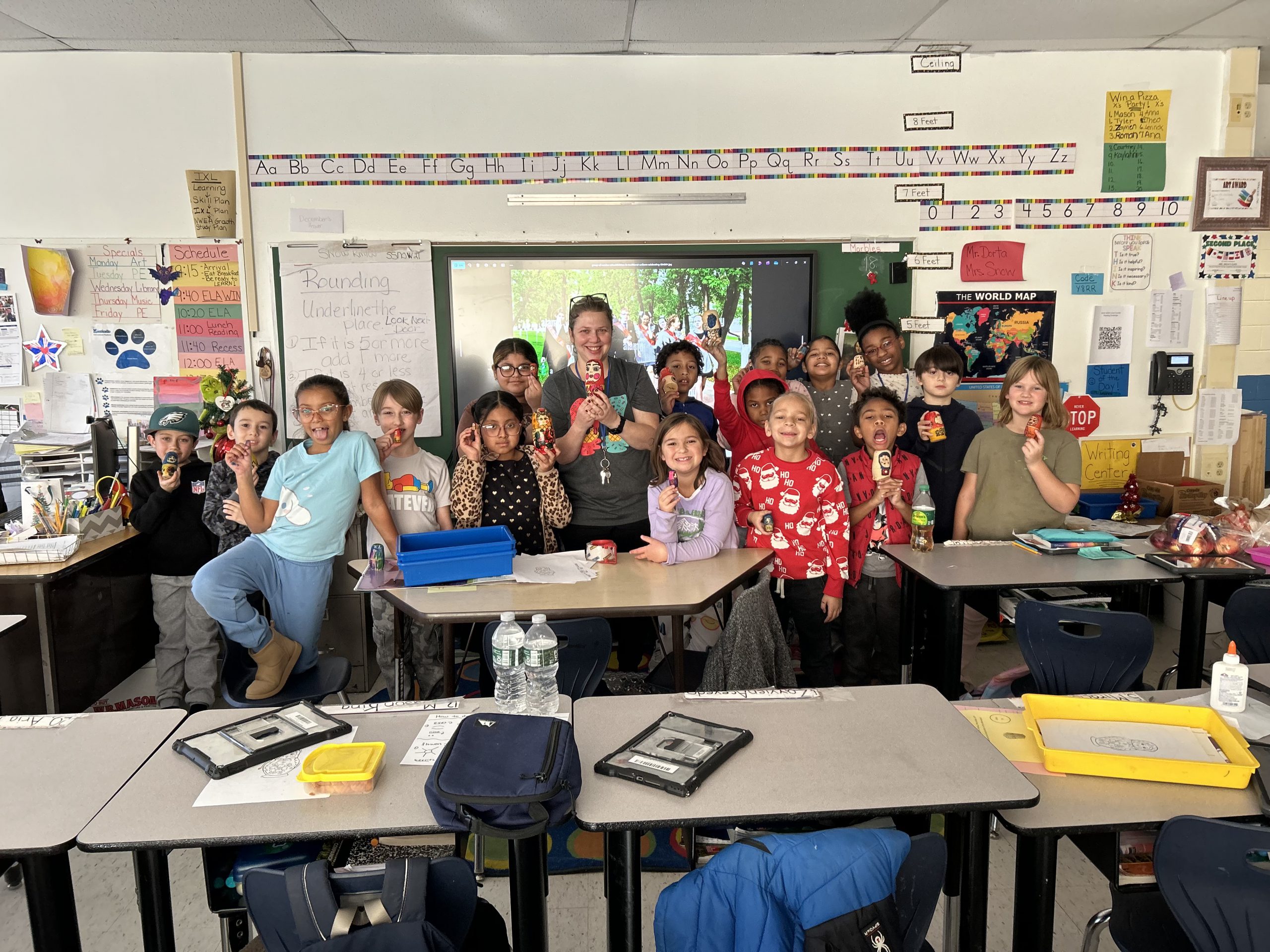
Mrs. Kharkover, who grew up in Saint Petersburg in the former Soviet Union (USSR), shared her personal experiences of life under communist rule. She explained to students that many families were required to share apartments, kitchens, closets, and even phone lines. Despite her father working as a plastic surgeon and her mother as a rocket scientist, her family often struggled to afford food. She described standing in long lines as a young child just to buy milk and seeing store shelves nearly empty.
She also spoke about how rare and special treats were in Russia at the time. During New Year celebrations, children might receive a single piece of gum or an orange, gifts that could cost a week’s wages. Mrs. Kharkover compared this to how an American child might feel receiving a new bicycle for their birthday.
Transportation was another major difference. Most people could not afford cars and walked everywhere. As a child, she often walked to the Winter Palace, built by Peter the Great in the 1700s. Today, the palace is home to the Hermitage Museum, one of the largest museums in the world, so large that it cannot be toured in a single day. She also described the drawbridges along the Neva River, which rise to allow boats to pass while traffic and pedestrians wait below.
Students were fascinated to learn about the extreme cold in Saint Petersburg. Mrs. Kharkover shared that snow sometimes falls as early as September 1, and that water can freeze in the air during winter. She told a story about getting frostbite as a child after removing her mitten to eat an apple, which resulted in a trip to the hospital.
She brought in her grandmother’s tea doll, a fabric doll placed over teapots to keep tea warm in freezing temperatures. She also described Russia’s “White Nights” in June, when the sun shines for nearly 23 hours a day, and shared memories of going out for ice cream with her grandfather at one o’clock in the morning.
Mrs. Kharkover also taught students about Russian schools, which often serve children from kindergarten through tenth grade in the same building. She described the large coat rooms where students stored heavy winter clothing and the school uniforms worn by all students. Children also joined the Young Pioneers, a state-sponsored youth organization similar in structure to scouting programs in the United States, where members wore red neckties as a symbol of participation.
Although life was difficult, she emphasized that education was strong and free for all children. She was able to take classes in art, fencing, and dance at no cost.
The cultural lesson continued with Russian folk art and storytelling. Mrs. Kharkover brought in hand-painted wooden jewelry boxes featuring traditional fairy tales, including one over 100 years old that had belonged to her grandfather. She shared stories such as the tale of a magical dough ball chased by animals and the legend of Baba Yaga, a mysterious figure who lives in a house with chicken legs.
As a hands-on activity, each student received a Russian nesting doll, known as a matryoshka, and learned how to paint it using traditional Khokhloma designs. Students also had the opportunity to sample popular Russian treats, including lemon-chocolate, caramels, and gingerbread imported from Russia.
The experience gave students a memorable look into Russian history, culture, and daily life, combining storytelling, art, and firsthand experiences into an engaging lesson they will not soon forget.